Scroll to explore how g.on aimPort is used across the airport from asset management to real-time operations.
Airports are among the most complex places in the world to manage. Dozens of teams. Thousands of assets. Processes that cross departmental boundaries and data that unfortunately rarely does. When engineering, security, operations, facility and infrastructure management each work from their own systems, the gaps between them become a risk.
g.on aimPort gives every team from engineering and facility to security, ground handling, and operations access to the same spatial foundation.
The same maps. The same asset records. The same processes.
When your data is efficiently distributed, you make faster decisions.
When your processes are connected, nothing gets overlooked.
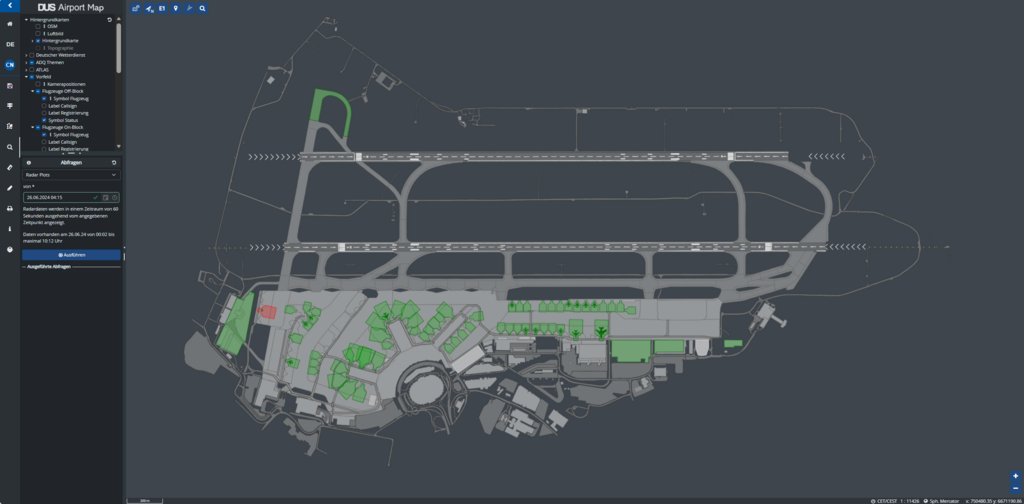
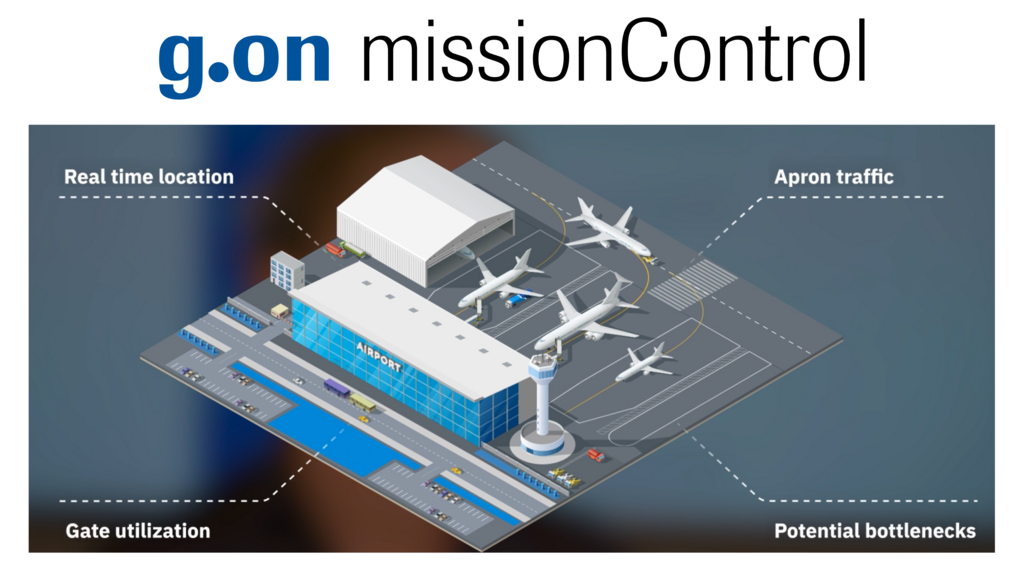
g.on missionControl brings together everything that g.on aimPort knows about your airport – and adds the layer of live data.
Aircraft positions, vehicle movements, gate and checkpoint occupancy, active incidents, ongoing construction, access events, runway surface conditions – all visible on an operational map, updated in real-time and connected to your processes.
It’s not just a dashboard. It’s a current situational picture that your teams need to make quick, safe decisions – whether on a normal day or in a real emergency.
Built on the same g.on aimPort platform that your teams are already using. No new system to learn, no additional silo solution to manage.
European airports are facing a legally binding deadline: By the end of 2027, the EU regulation Common Project One (EU 2021/116) requires airports to implement integrated real-time operational capabilities in the areas of surface management, collaborative decision-making, and network data exchange.
g.on missionControl is a CP1-enabling platform. It supports AF2 through real-time surface operations and asset integration, AF4 through shared situational awareness and collaborative disruption management, as well as the operational foundation for SWIM-capable data exchange under AF5.
Düsseldorf Airport is already using it – with A-CDM integration, 99% availability, and a live operational picture across all airside areas.
1. Real-time tracking of aircraft & vehicles (via AODB + radar)
2. Live gate, stand & checkpoint occupancy (via AODB + PAX)
3. Runway & taxiway conditions (via ATLAS / SNOWTAM)
4. ADQ data integration
5. Live weather data
6. Tactical operational map (incl. Emergency Dispatch System integration)
7. Routing (incl. ASRN — Aerodrome Surface Routing Network)
8. Incident & disturbance management
9. Integrated process & approval workflows (via g.on pm)
10. FOD reporting & infrastructure defect management
11. Access control & airside security monitoring
12. Camera & surveillance integration
13. Facility sensor monitoring
14. CAFM view integration
15. Parking & occupancy monitoring
g.on missionControl integrates your existing airport systems through g.on connect – a modular plugin architecture that connects data sources without replacing them.
Current integration examples: AODB (flight operations & radar tracking) · ATLAS (runway and taxiway conditions) · video surveillance · PAX counting systems · access & barrier control · BACnet (building automation & sensors) · airport web services (parking & occupancy) . CAFM systems
Each integration runs persistently, with automatic failover and interface monitoring – ensuring that the operational situational awareness is always current and reliable.
See how airports use g.on aimPort to integrate their data, teams, and operations.
Every airport is different. Our templates are focused, ready-to-deploy solutions built on g.on aimPort — use them as a starting point, or work with our team to build something designed entirely around your airport.

The ADQ template provides a continuous digital workflow for the collection, validation, and provision of aeronautical data according to EASA ADQ (EU 73/2010) and IR 2020/469. Geometries, attributes, metadata, and process documentation are structured and combined in the Aerodrome Data Model – including ADQ-compliant outputs for downstream systems. For maximum data quality, traceability, and compliance.
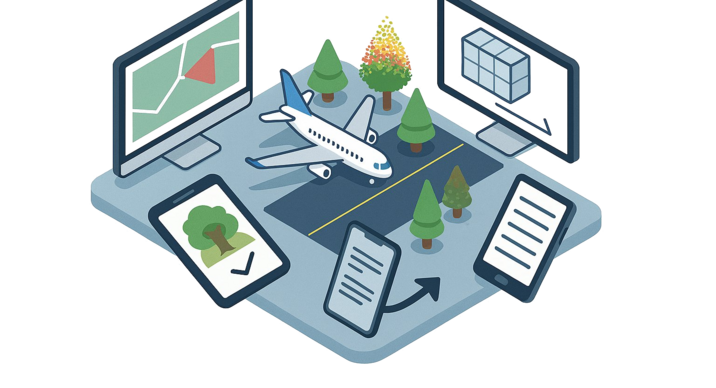
Visualize and analyze different obstacle types, including OLS – in 2D or 3D. Scenario analyses, growth forecasts, and regulatory-compliant reports support informed decisions. With g.on field, field teams document changes directly on-site.
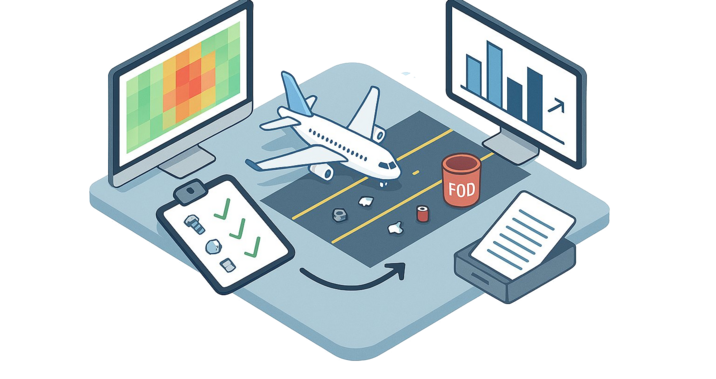
The map-based solution facilitates a systematic recording, analysis, and evaluation of FOD events. By utilizing heatmaps, trend dashboards, and mobile data collection, you enhance transparency, efficiency, and compliance — ensuring safer and more optimized operations.
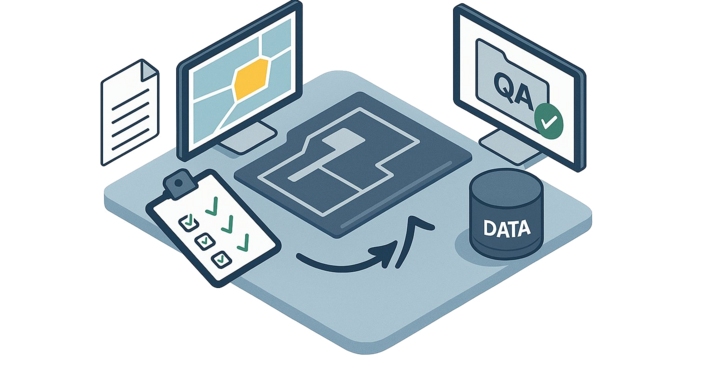
A fully digital workflow for the structured management of infrastructure changes – from data collection through QA checks to versioned integration. For complete traceability, highest data quality, and sustainable consistency of your data.